Caregiver Access
Led a 0→1 workflow spanning sponsor, site, and patient experiences that introduced caregiver participation in clinical trials, a role that did not exist in the product before, unlocking nearly $100M in potential new revenue from study sponsors.
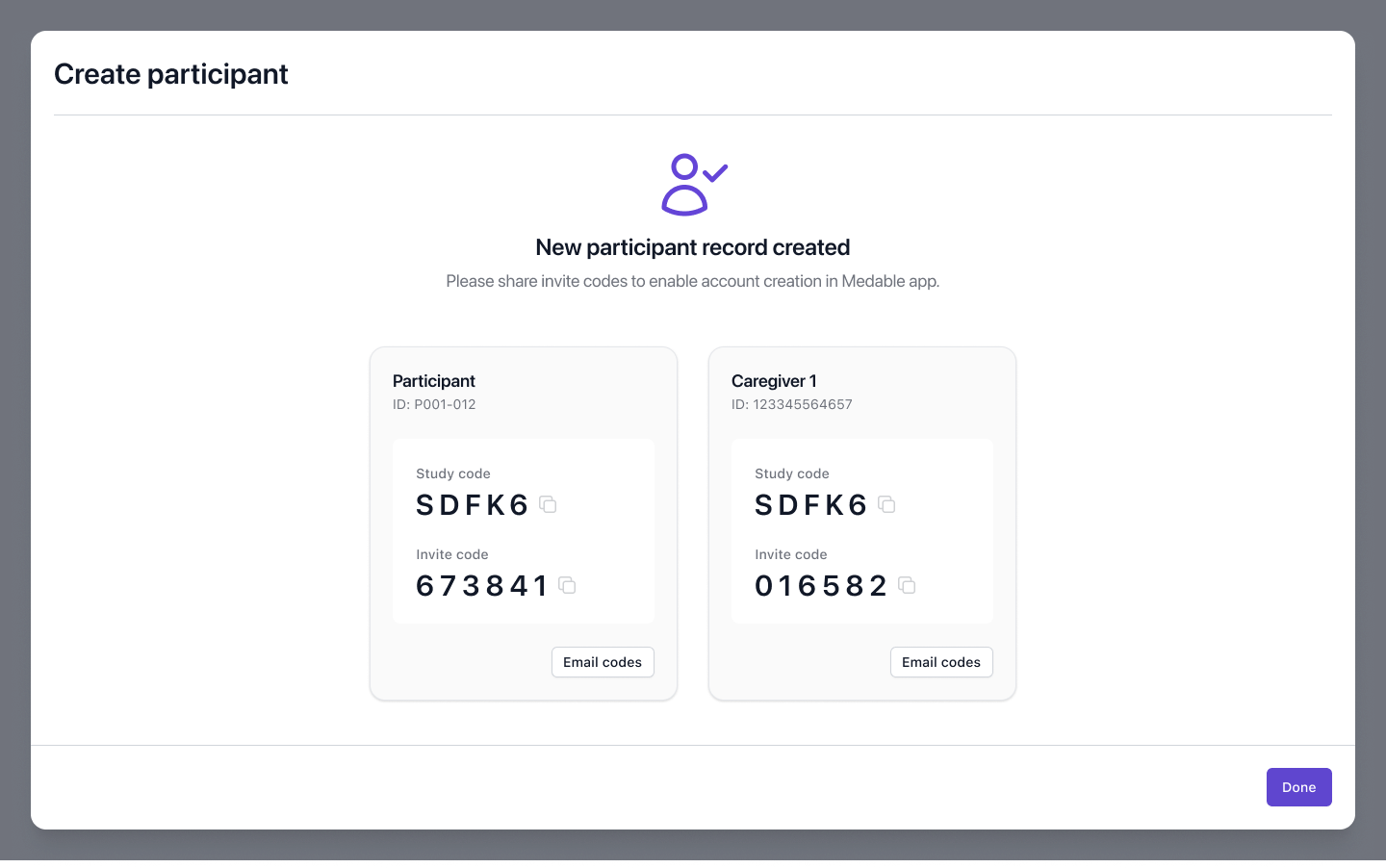
Trials were designed around a single participant. Many patients need a second person in the room.
The platform had no concept of a caregiver. For pediatric, elderly, and cognitively impaired populations, someone else often manages medication schedules, reports symptoms, and completes eCOA on the patient's behalf. There was no way to represent that relationship in software.
- No caregiver role existed anywhere in the data model across sponsor, site, or patient experiences
- Sponsors built one-off manual workarounds per study or excluded caregiver-dependent populations from eligibility
- Site staff had no supported way to invite, verify, or manage a caregiver's access to study data
- No internal precedent and no clean external pattern to borrow from; genuinely ambiguous problem space
- Configurable caregiver role sponsors can enable per study in the sponsor experience
- Site staff can invite, link, and manage caregiver access in the site experience
- Patient experience supports caregiver-linked accounts with their own consent and permission boundaries
- Studies can include caregiver-dependent populations that were previously blocked entirely
Constraints that shaped the work
Consent chain complexity
Caregiver consent and patient assent are not the same legal instrument. The flow had to hold up under GxP and HIPAA identity-segregation requirements.
No unified identity layer
Sponsor, site, and patient experiences did not share one model of who this person is and what they can see. The design had to work across three codebases with different data ownership boundaries.
Design process
Discovery with ClinOps and sponsors
Generative interviews with ClinOps teams and sponsor stakeholders on how caregiver-dependent studies were handled off-platform, in spreadsheets and manual site processes.
- ·Mapped therapeutic areas that most needed caregiver support: pediatrics, neurology, oncology with cognitive burden
- ·Catalogued manual workarounds sponsors used to route around the missing capability
- ·Identified caregiver consent vs patient assent as the crux of the design problem
Mapping the identity and consent model
Before screen design, defined who a caregiver is relative to a participant: what they can see, act on, and how access is granted, verified, and revoked.
- ·Decision tree for caregiver-only, caregiver-plus-patient, and transition-of-consent scenarios
- ·Validated against GxP and HIPAA identity-segregation requirements with compliance stakeholders
Cross-experience workflow design
Designed invite-and-link as one continuous journey: sponsors enable capability in the sponsor experience, site staff issue invites in the site experience, and caregivers complete linking and consent in the patient experience.
- ·Sequenced rollout so each team built against a stable contract
- ·Defined data ownership per experience given no shared identity layer at the start
Validation and iteration
Tested invite and consent flows with site coordinators and iterated on permission clarity so caregivers and patients each had a legible view of who could see what.
The caregiver invite and consent flow
A site coordinator issues a caregiver invite tied to a specific participant. The caregiver completes identity verification and consent on their own device. Both patient and caregiver end up with a clear, permissioned view of what the caregiver can do on the patient's behalf.
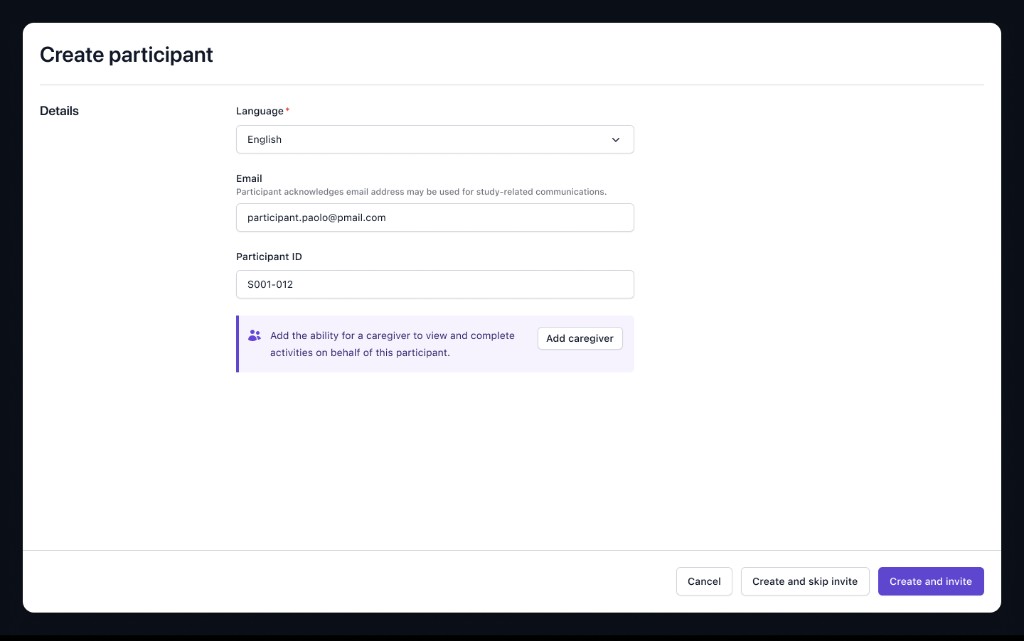
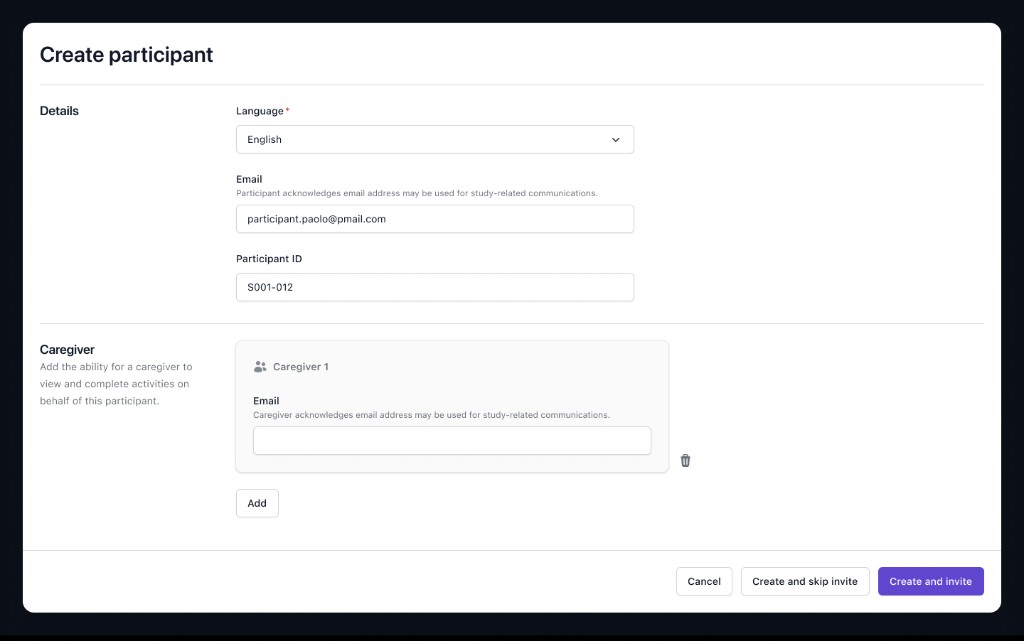
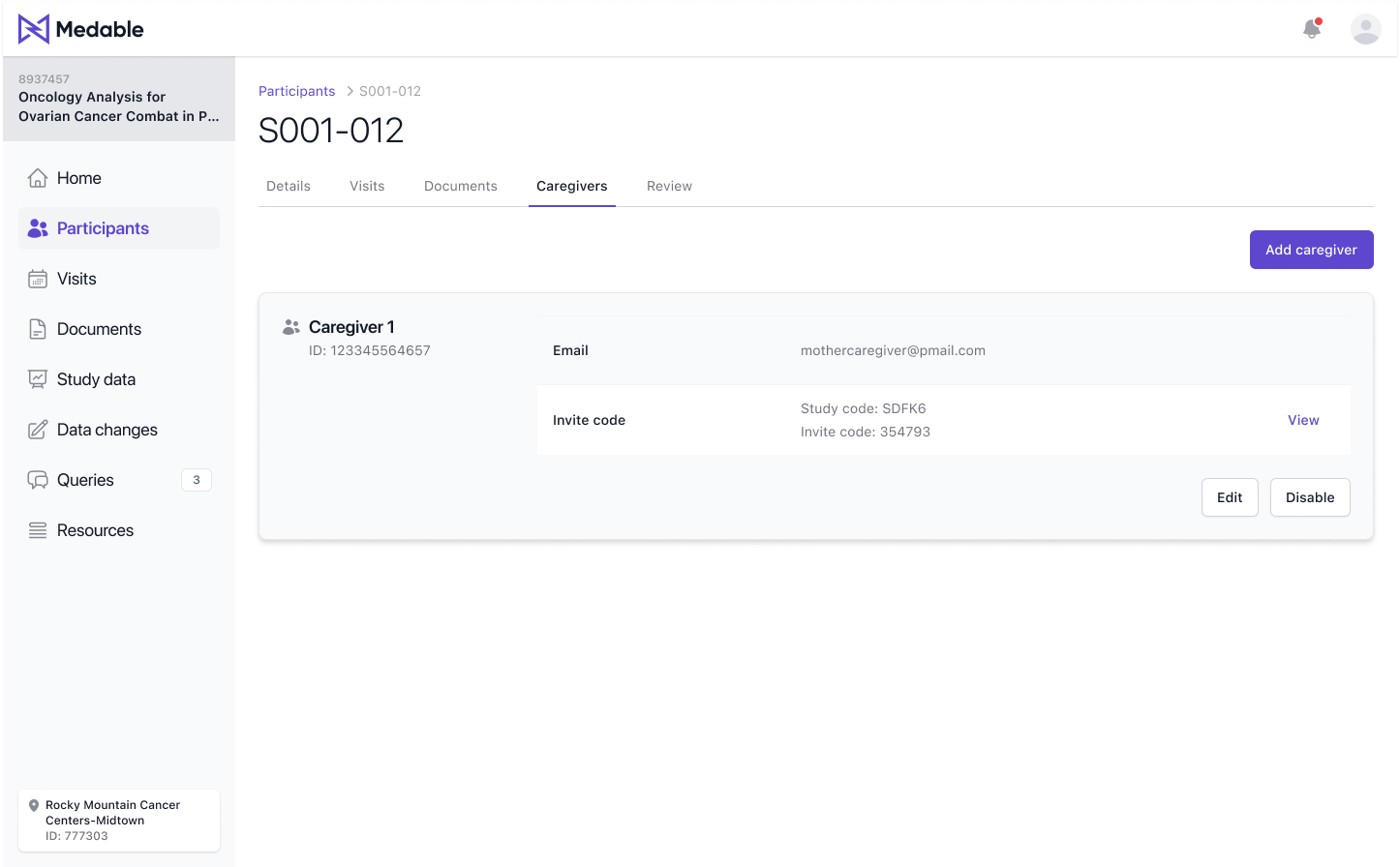
Sponsor configuration
Sponsors turn caregiver participation on per study and define permission boundaries: what a caregiver can view, complete, or submit on a participant's behalf.
Site-managed invitation
Site coordinators invite a caregiver against a specific participant record, with the same rigor as any other study role assignment.
Caregiver-linked patient experience
The caregiver completes their own consent and identity verification, then gets a permissioned view scoped to exactly what the sponsor configured.
Impact
Caregiver Access made caregiver-dependent populations eligible for trials that previously had to exclude them, with a net-new capability across the platform.
Reflection
Identity before UI
The hardest part was not the screens; it was the identity model underneath. Getting the consent chain right before design scaled up prevented rework across sponsor, site, and patient experiences.
Pull compliance in earlier
The legal distinction between consent and assent reshaped the invite flow after the first pass. I would bring compliance into the decision-tree exercise even earlier next time.